
Jeff Bezos Returns as Co-CEO: The $6.2 Billion Bet on AI for the Physical Economy
Updated: Dec 8, 2025
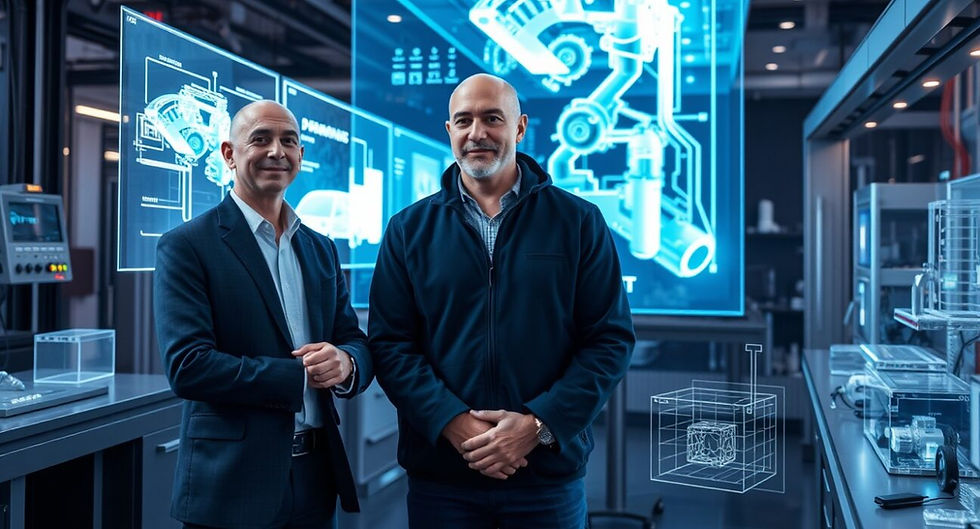
Jeff Bezos, the visionary founder who stepped away from the Amazon CEO role in 2021, is officially back in an operational leadership position. He has been named Co-CEO of his new AI venture, Project Prometheus, which has launched with a colossal $6.2 billion in funding. This move signals a massive shift in focus for one of the world's most influential entrepreneurs, pointing firmly toward the future of deep-tech and industrial transformation.
Key Details on Project Prometheus and Its Leadership
Project Prometheus is not focused on consumer apps or language models like its many AI competitors. Instead, its mission is "AI for the physical economy," applying advanced AI and simulation technologies to high-barrier sectors such as:
Manufacturing
Automotive Engineering
Aerospace (aligned with Bezos's Blue Origin interests)
Computing Hardware
The sheer scale of the initial $6.2 billion funding—partly contributed by Bezos himself—positions Project Prometheus as one of the most well-capitalized early-stage startups globally.
The Other Co-CEO: Vik Bajaj
Bezos will share the helm with Vik Bajaj, a renowned physicist and chemist who brings deep experience from Google's 'X' Moonshot Factory, where he worked closely with Sergey Brin and co-founded the life sciences company Verily. This pairing of Bezos's business-building acumen with Bajaj's scientific and deep-tech expertise is designed to tackle the complex, long-horizon challenges of industrial AI.
💡 Why Bezos's New Venture is a Corporate Game Changer
Bezos's decision to return to a day-to-day operational role, especially in a cutting-edge field like industrial AI, has significant implications for both established corporations and the startup ecosystem.
Validation for Hard-Tech: The move validates the idea that the next frontier of massive economic opportunity lies in applying AI to physical systems and complex engineering, moving beyond the current focus on software and services.
Accelerated Competition: Project Prometheus's massive financial backing and celebrity leadership will inject intense competitive pressure into manufacturing and engineering sectors. This will force existing players to rapidly accelerate their own AI integration and automation strategies.
Top-Tier Talent Migration: The startup has already hired nearly 100 employees, poaching researchers and engineers from leading AI labs like OpenAI, Google DeepMind, and Meta. This talent drain signals that the battle for the world's top AI minds is heating up, specifically in the realm of applied scientific computing.
The Vision: AI That Learns from the Real World
Unlike large language models (LLMs) that learn primarily from text and digital data, Project Prometheus aims to build AI systems that learn from real-world physical experimentation and trial-and-error. This approach is crucial for breakthroughs in materials science, robotics, and complex hardware design.
Execution Risk is High: While the vision is grand, the challenges are significant. Developing AI for the physical world is capital-intensive and requires a long-term horizon. The startup must successfully bridge the gap between AI models and tangible, reliable industrial outcomes to justify its valuation.
🧭 What Corporate Leaders and Entrepreneurs Should Watch
Partnership Strategy: Will Project Prometheus aim to displace existing industrial giants, or will it seek strategic partnerships with aerospace, automotive, or computing hardware manufacturers? Collaborations could represent massive opportunities for its partners.
Product Launch: Monitor initial product or pilot announcements. These will reveal the specific, measurable problems Project Prometheus aims to solve first, setting a precedent for its competitive strategy.
Industrial AI Mandate: Corporate readers in manufacturing and engineering should treat this news as a strong signal to evaluate their own AI and automation roadmaps. The arrival of a well-funded, aggressively led player like Project Prometheus means the time for exploratory AI projects is over—it's now an operational imperative.
The Future of AI in the Physical Economy
As Project Prometheus embarks on its journey, the implications for various industries are profound. The integration of AI into the physical economy could redefine how businesses operate.
The Role of AI in Manufacturing
AI's potential to revolutionize manufacturing processes is immense. By optimizing supply chains and enhancing production efficiency, companies can significantly reduce costs. This shift could lead to a new era of smart factories, where machines communicate seamlessly and adapt to changing demands.
Automotive Innovations
In the automotive sector, AI can enhance vehicle design and manufacturing. From autonomous driving technologies to smart manufacturing processes, the possibilities are endless. Companies that embrace these innovations will likely gain a competitive edge.
Aerospace Advancements
The aerospace industry stands to benefit greatly from AI applications. With Bezos's background in this field, Project Prometheus may lead to breakthroughs in aircraft design and manufacturing efficiency. This could result in safer, more efficient air travel.
The Importance of Collaboration
For Project Prometheus to succeed, collaboration will be key. By partnering with established players in various industries, the startup can leverage existing expertise and resources. This approach could accelerate innovation and drive growth.
Conclusion
Jeff Bezos's AI Startup, Project Prometheus, is more than just a new company; it's a declaration that the industrial revolution of AI has begun, backed by one of the greatest corporate builders of our time. The future of AI in the physical economy is bright, and all eyes will be on how this venture unfolds.
As the landscape of industrial AI evolves, companies must adapt and innovate. The time for action is now.


Comments